
Leo IV the Khazar
Byzantine emperor
Born 25 January AD 750 · died 8 September AD 780, aged 30
Also known as Leo IV
Who was alive at the same time as Leo IV the Khazar?
- Pope Zachary, AD 679 – AD 752
- Ja'far al-Sadiq, c. AD 701 – c. AD 765
- Abu Hanifa, AD 699 – c. AD 768
- Pope Adrian I, AD 700 – AD 795
- Pope Paul I, AD 700 – AD 767
- Li Bai, AD 701 – AD 762
- Malik ibn Anas, c. AD 711 – AD 795
- Rabia Basri, 710s – AD 801
- Du Fu, AD 712 – AD 770
- Pope Stephen II, c. AD 714 – AD 757
- Pepin the Short, c. AD 716 – AD 768
- Pope Stephen III, c. AD 720 – AD 772
- Jabir ibn Hayyan, AD 721 – AD 815
- Alcuin, c. AD 740 – AD 804
- Charlemagne, c. AD 744 – AD 814
- Irene of Athens, c. AD 752 – AD 803
- Pope Leo III, AD 750 – c. AD 816
- Leo IV the Khazar, AD 750 – AD 780
- Abu Nuwas, c. AD 759 – AD 814
- Harun al-Rashid, AD 766 – AD 809
- Al-Shafi'i, AD 767 – AD 820
- Pope Stephen IV, c. AD 770 – AD 817
- Pope Paschal I, c. AD 775 – AD 824
- Louis the Pious, AD 778 – AD 840
When Leo IV the Khazar was born, Li Bai was 48, Du Fu was 37 or 38, Jabir ibn Hayyan was 28 or 29, Abu Hanifa was 50 and Pope Adrian I was 49 or 50.
When Leo IV the Khazar died, Jabir ibn Hayyan was 58 or 59, Harun al-Rashid was 14, Pope Leo III was 29 or 30, Louis the Pious was 1 or 2 and Pope Adrian I was 79 or 80.
Born during Leo IV the Khazar’s lifetime: Abu Nuwas, Harun al-Rashid, Louis the Pious, Al-Shafi'i, Pope Paschal I, Pope Stephen IV, Bai Juyi and Al-Jahiz.
Not quite contemporaries: Adi Shankara was born about 6 years after Leo IV the Khazar died, Bede died about 15 years before Leo IV the Khazar was born, Charles Martel died about 9 years before Leo IV the Khazar was born and Pope Gregory IV was born about 13 years after Leo IV the Khazar died.
What happened in Leo IV the Khazar’s lifetime
- An Lushan rebellion AD 755–AD 763Leo IV the Khazar was 5
Where Leo IV the Khazar’s contemporaries were born
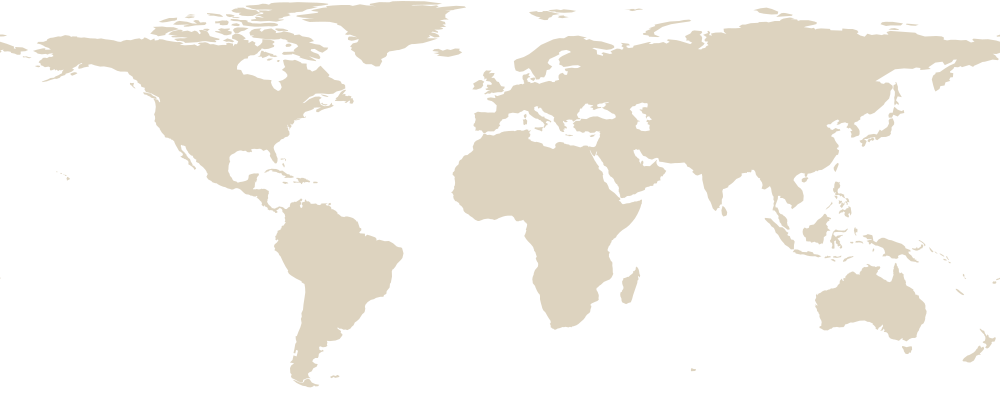

Birthplaces as a list
- Leo IV the Khazar: Constantinople
- Pope Zachary: Santa Severina
- Ja'far al-Sadiq: Medina
- Abu Hanifa: Kufa
- Pope Adrian I: Rome
- Pope Paul I: Rome
- Li Bai: Suyab
- Malik ibn Anas: Medina
- Rabia Basri: Basra
- Du Fu: Gongyi
- Pope Stephen II: Rome
- Pepin the Short: Liège
- Pope Stephen III: Syracuse
- Jabir ibn Hayyan: Tus
- Alcuin: York
- Charlemagne: Franciaf
- Irene of Athens: Athens
- Pope Leo III: Rome
- Abu Nuwas: Ahvaz
- Harun al-Rashid: Ray
- Al-Shafi'i: Gaza City
- Pope Stephen IV: Rome
- Pope Paschal I: Rome
- Louis the Pious: Chasseneuil-du-Poitou
- Abd al-Rahman I: Damascus
- Constantine V: Constantinople
- Nikephoros I: Pisidia
- Bai Juyi: Xinzheng
- Al-Jahiz: Basra
- Ecgberht, King of Wessex: Kingdom of Wessex
- Han Yu: Meng Prefecture
- Ali al-Rida: Medina
- Wang Wei: Yongji
- Al-Mansur: Humayma
- Carloman I: Soissons
- Michael I Rangabe: Constantinople
- Leo V the Armenian: Ostikanate of Arminiya
- Abu Muslim: Isfahan
- Paul the Deacon: Cividale del Friuli
- Constantine VI: Constantinople
- Saint Boniface: Crediton
- Al-Saffah: Humayma
- Michael II: Amorium
- Musa al-Kazim: Al-Abwa
- Krum: First Bulgarian Empire
- Kūkai: Zentsū-ji Temple
- Ibn Ishaq: Medina
- Al-Mahdi: Humayma
- Emperor Xuanzong of Tang: Chang'an
- Theophanes the Confessor: Constantinople
- Desiderius: Brescia
- Emperor Kanmu: Heijō-kyō
- Hisham I of Córdoba: Córdoba
- Carloman: Vienne
- Alfonso II of Asturias: Oviedo
Compare Leo IV the Khazar
The 62 best-known contemporaries
62 of the people we track were surely alive at the same time as Leo IV the Khazar. All of them are listed here. See also everyone alive in AD 765.
- Li Bai AD 701 – AD 762
- Charlemagne c. AD 744 – AD 814
- Abu Nuwas c. AD 759 – AD 814
- Du Fu AD 712 – AD 770
- Jabir ibn Hayyan AD 721 – AD 815
- Harun al-Rashid AD 766 – AD 809
- Abu Hanifa AD 699 – c. AD 768
- Pope Leo III AD 750 – c. AD 816
- Louis the Pious AD 778 – AD 840
- Pope Adrian I AD 700 – AD 795
- Pepin the Short c. AD 716 – AD 768
- Pope Paul I AD 700 – AD 767
- Al-Shafi'i AD 767 – AD 820
- Pope Paschal I c. AD 775 – AD 824
- Pope Stephen III c. AD 720 – AD 772
- Pope Zachary AD 679 – AD 752
- Pope Stephen II c. AD 714 – AD 757
- Ja'far al-Sadiq c. AD 701 – c. AD 765
- Pope Stephen IV c. AD 770 – AD 817
- Malik ibn Anas c. AD 711 – AD 795
- Irene of Athens c. AD 752 – AD 803
- Rabia Basri 710s – AD 801
- Alcuin c. AD 740 – AD 804
- Abd al-Rahman I AD 731 – AD 788
- Roland AD 737 – AD 778
- Padmasambhava AD 717 – AD 762
- Constantine V AD 718 – AD 775
- Nikephoros I c. AD 750 – AD 811
- Bai Juyi AD 772 – AD 846
- Al-Jahiz AD 775 – c. AD 869
- Ecgberht, King of Wessex AD 771 – AD 839
- Han Yu AD 768 – AD 824
- Ali al-Rida AD 770 – AD 818
- Wang Wei AD 699 – c. AD 760
- Al-Mansur AD 713 – AD 775
- Carloman I AD 751 – AD 771
- Michael I Rangabe c. AD 770 – AD 844
- Leo V the Armenian AD 775 – AD 820
- Abu Muslim c. AD 719 – AD 755
- Paul the Deacon c. AD 720 – c. AD 799
- Constantine VI AD 771 – c. AD 798
- Saint Boniface c. AD 675 – AD 754
- Al-Saffah AD 722 – AD 754
- Michael II AD 770 – AD 829
- Staurakios AD 775 – AD 812
- Musa al-Kazim AD 745 – c. AD 799
- Krum AD 755 – AD 814
- Einhard c. AD 774 – AD 840
- Kūkai AD 774 – AD 835
- Marwan II AD 688 – AD 750
- Ibn Ishaq AD 704 – AD 768
- Al-Mahdi AD 744 – AD 785
- Emperor Xuanzong of Tang c. AD 684 – c. AD 765
- Theophanes the Confessor AD 759 – AD 817
- Desiderius c. AD 710 – c. AD 786
- Al-Hadi c. AD 763 – AD 786
- Pepin of Italy AD 777 – AD 810
- Shantideva c. AD 685 – c. AD 763
- Emperor Kanmu AD 737 – AD 806
- Hisham I of Córdoba AD 757 – AD 796
- Carloman c. AD 710 – AD 754
- Alfonso II of Asturias AD 759 – AD 842